
Arranging care for the first time is disorientating. Most people come to it in a hurry, often after a fall or a hospital admission, and often while trying to hold down a job and reassure a parent who does not want any of this to be happening. The process below exists to take as much of that weight off you as we can. Nothing here costs anything until you have seen the price in writing and agreed to it.

Call Novaedge Services Limited today on 07934 583993 or email hello@novaedgelimited.com to arrange a free, no obligation home visit. There is no pressure and nothing to sign.


You ring, or you email, or a district nurse or social worker refers you. We ask what is happening and what would make the biggest difference. This is not a sales call and there is no script. If it turns out that what you need is not home care, or is not home care from us, we will say so and point you somewhere useful. That happens more often than you might expect and we would rather be trusted than booked.

We come to you, at a time that suits you, and we would encourage you to have whoever you want with you. We are not there to assess you like a form. We are there to understand how your day actually goes and where it has become difficult.
We will talk about:
We check the home for safety while we are there. If we spot something that needs a different service, an occupational therapy assessment through Kirklees Council, a free Safe and Well visit from West Yorkshire Fire and Rescue Service on 0800 587 4536, a review of your medicines by the GP, we will tell you and help you ask.

A care plan written about someone is a document. A care plan written with them is a working agreement. Yours sets out exactly what will happen, when, and by whom, and it belongs to you. You keep a copy in your home and you can see the electronic record at any time.
We put your costs in writing at the same time, before anything begins.

You meet the people who will be coming before the first visit, not on the doorstep. We introduce them, show them around the plan with you, and make sure you are comfortable with them before care begins.

Your carers arrive with your plan and with a short printed summary of what matters, so that the first visit is not spent asking you questions you have already answered. Every visit is checked in and out through the electronic call monitoring system on the carer's phone, which means the office sees a late or missed visit as an alert rather than as a phone call from a worried daughter two hours later.
We ring you in the first week to ask how it is going, and we mean the question. Early on is when the small things surface, and small things fixed early do not become complaints.

Care plans are reviewed formally at least every six months, and sooner whenever anything changes, a discharge from hospital, a change in mobility, a new medicine, a family member going back to work. You can ask for a review at any time. Nothing is set in stone.
With your consent, we keep the people you choose in the picture. That can be a call after every visit, a weekly summary, or access to the electronic record so a family member two hundred miles away can see that the tea was drunk and the tablets were taken. What we will not do is share your information with someone simply because they are related to you. It is your information and your decision.
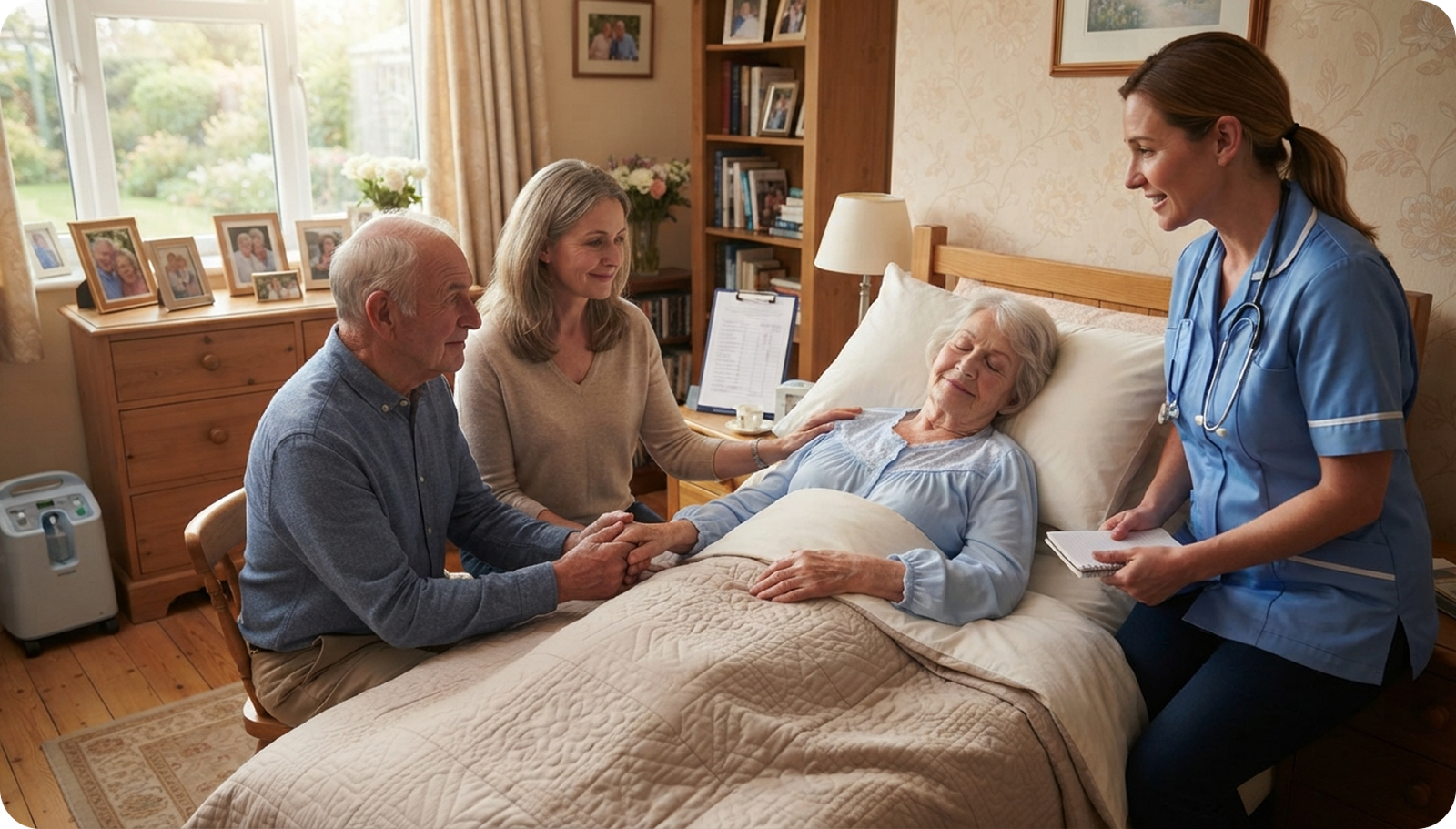
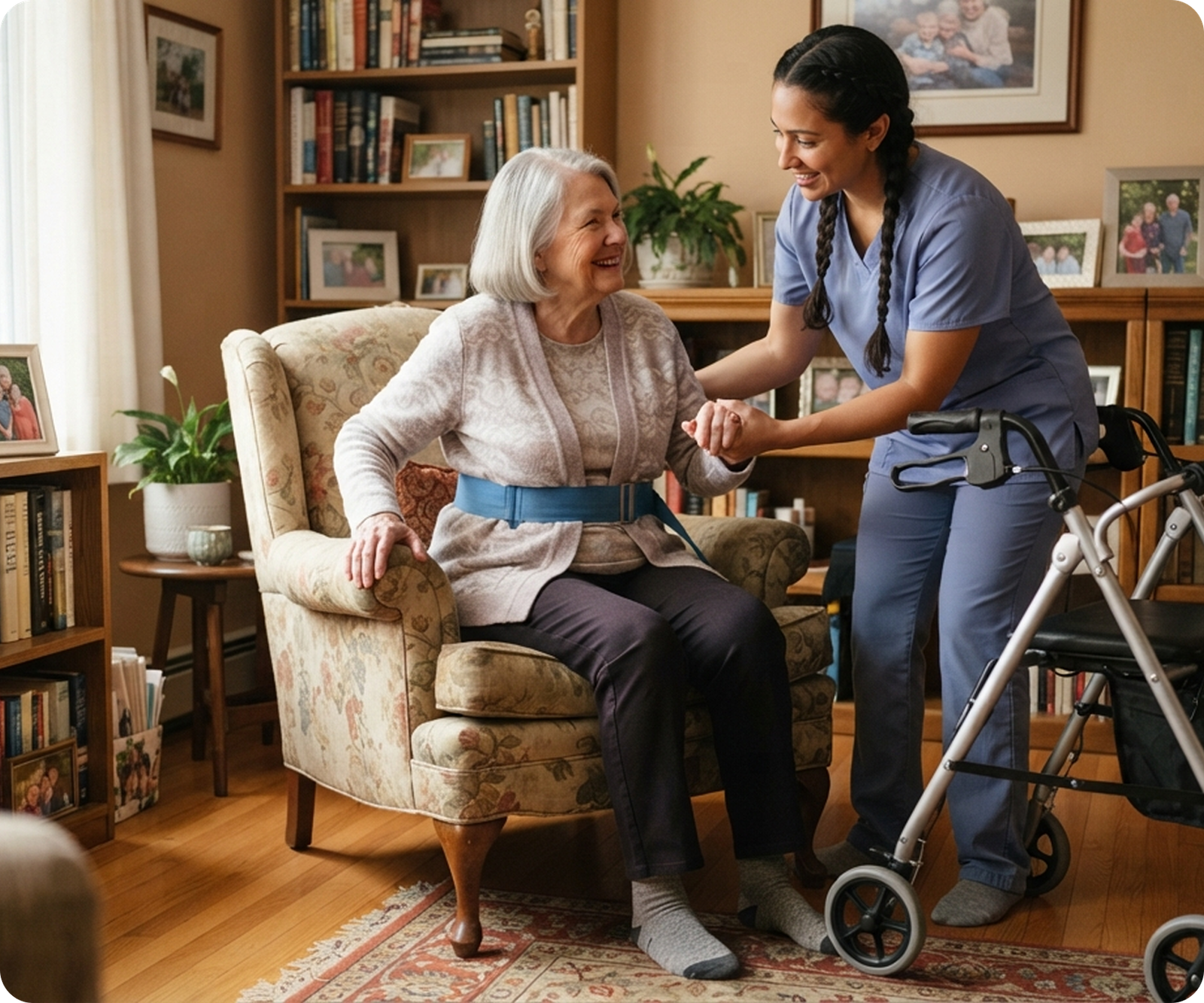
Person centred care means the support is built around the person, their preferences, history, culture and goals, rather than around the convenience of the organisation providing it. In practice it is the difference between "the 9am call" and "helping Mrs Ahmed get ready for the day the way she likes to, which takes about forty minutes and works best if you make the tea first".
It is one of those phrases that has been used so often it has almost stopped meaning anything, so here is the test we apply: If a care plan could be handed to a different person without changing a word, it is not person centred. Yours should be unmistakably about you.

A small, named team rather than whoever happens to be free. When someone is on leave or off sick we cover from inside that team wherever we possibly can, and if a new face is unavoidable we introduce them properly rather than sending them cold to your door.
An unhurried start. The first visit is longer than the ones that follow, because getting to know someone properly takes time and rushing it stores up problems. Nothing is signed on the first visit unless you want it to be.

A clear plan for when things go wrong. Every visit is checked in and checked out electronically, so a late or missed visit raises an alert automatically. If a carer cannot get a reply at the door, there is a written escalation: ring you, ring your next of kin, attend, and call the emergency services. Where a key safe is agreed, the code is held securely and changed when anyone leaves.
Ready to talk it through? Call Novaedge Services Limited on 07934 583993, or email hello@novaedgelimited.com. A conversation costs nothing.
Contact us